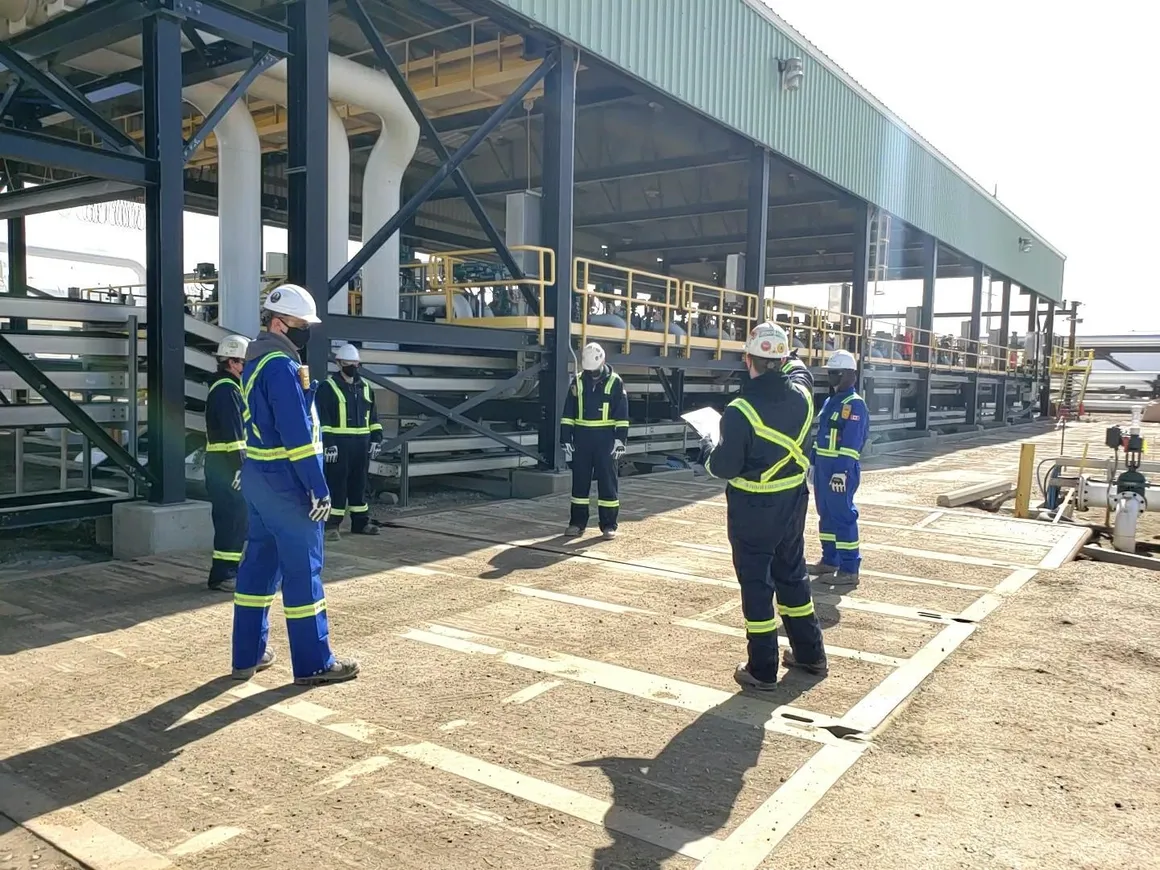
When the grid goes down, your critical systems need to stay up.
A UPS (Uninterruptible Power Supply) provides conditioned backup power to critical loads during grid power interruptions, voltage sags, and power quality events.
For industrial process control systems, data centres, emergency lighting, and communications equipment, even a brief power interruption can cause process upsets, data loss, or safety incidents.
A UPS system bridges the gap between grid power failure and generator startup — and for many applications, it provides power long enough to execute a controlled shutdown safely.
Full UPS lifecycle — design, installation, testing, and battery maintenance.
- UPS selection and sizing: load analysis and runtime calculation to select the right UPS capacity and topology (online double conversion, line interactive, offline) for the application.
- UPS installation: mounting, cabling, output distribution, and input power connection to CEC requirements.
- Battery system installation: VRLA (valve-regulated lead-acid), AGM, and lithium-ion battery cabinets — racking, cabling, and interconnection.
- Transfer switch and bypass wiring: static bypass, maintenance bypass, and automatic transfer switch (ATS) installation for large UPS systems.
- Commissioning: load test, battery discharge test, transfer test, and alarm verification.
- Battery testing and maintenance: periodic battery impedance testing, capacity discharge testing, and battery replacement before failure.
- Monitoring integration: SNMP, relay output, or serial monitoring integration with building management systems or SCADA.
Where UPS protection is essential.
- Process control systems: PLC, DCS, and control room workstations — a power interruption at the wrong moment can cause a process safety event.
- Industrial instrumentation: transmitters and analysers that need continuous power for accurate process monitoring.
- Network and communications: switches, routers, and radio systems that must remain online during an outage.
- Data centres and server rooms: IT infrastructure requiring clean, reliable power.
- Emergency lighting: central battery and UPS systems for emergency lighting in commercial and institutional buildings.
- Security systems: access control, CCTV, and intrusion detection on UPS backup.
Most UPS failures are battery failures that preventive maintenance would have caught.
VRLA batteries typically need replacement at 3-5 years for critical applications — sooner in hot environments.
Pro Call Electric performs periodic battery impedance tests to identify weak cells before they fail silently in service, and replaces battery banks on a scheduled basis to prevent UPS failures when the power event finally happens.
Power quality and critical power expertise.
- Critical application experience: control system UPS, data centre UPS, and industrial process UPS — we understand the load profile and runtime requirements.
- CEC-compliant installation: all UPS electrical work to Canadian Electrical Code with permit and inspection.
- Battery maintenance programme: planned battery testing and replacement on a schedule, not after a failure.
- Master Electricians Alberta and FSR BC: qualified for electrical connections on UPS systems of all sizes.
- Monitoring integration: UPS alarms tied into the control system or building management, not just a local LED.