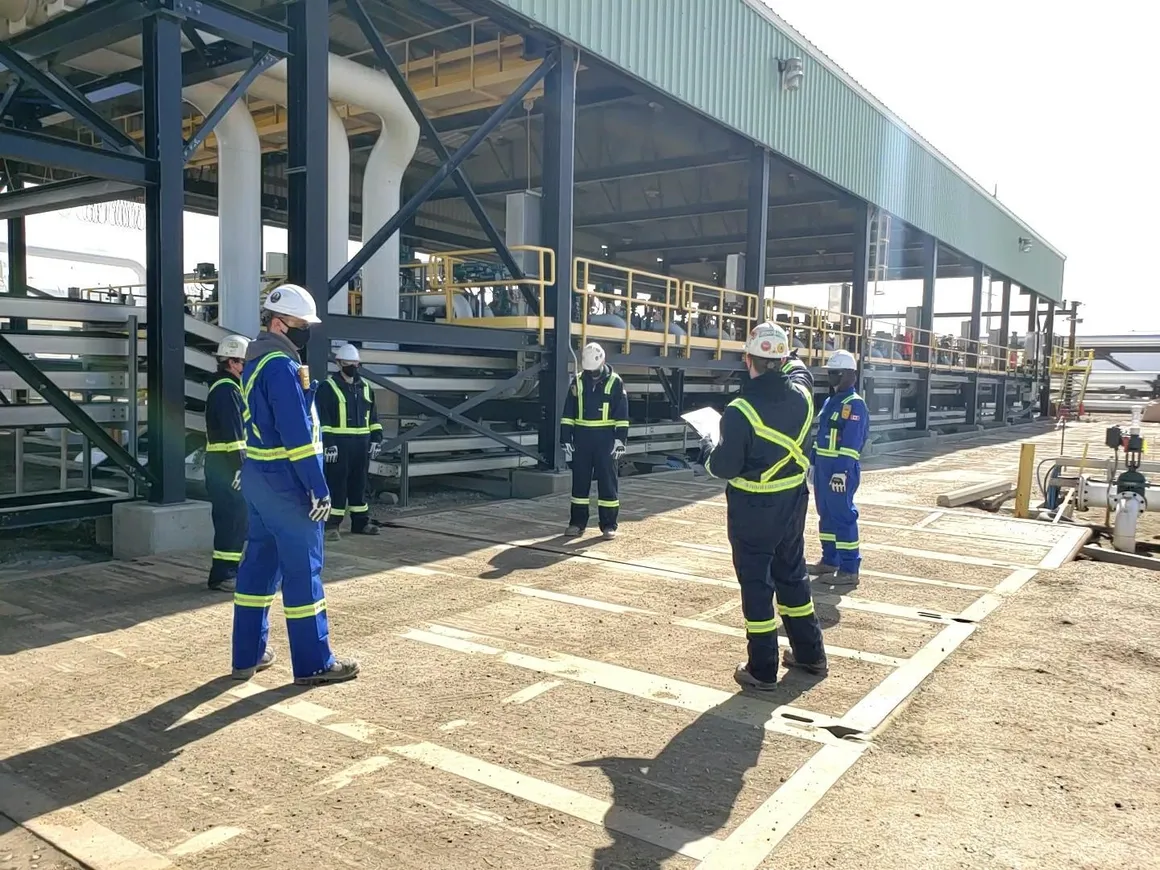
It’s not about the space being small. It’s about what’s breathing in there.
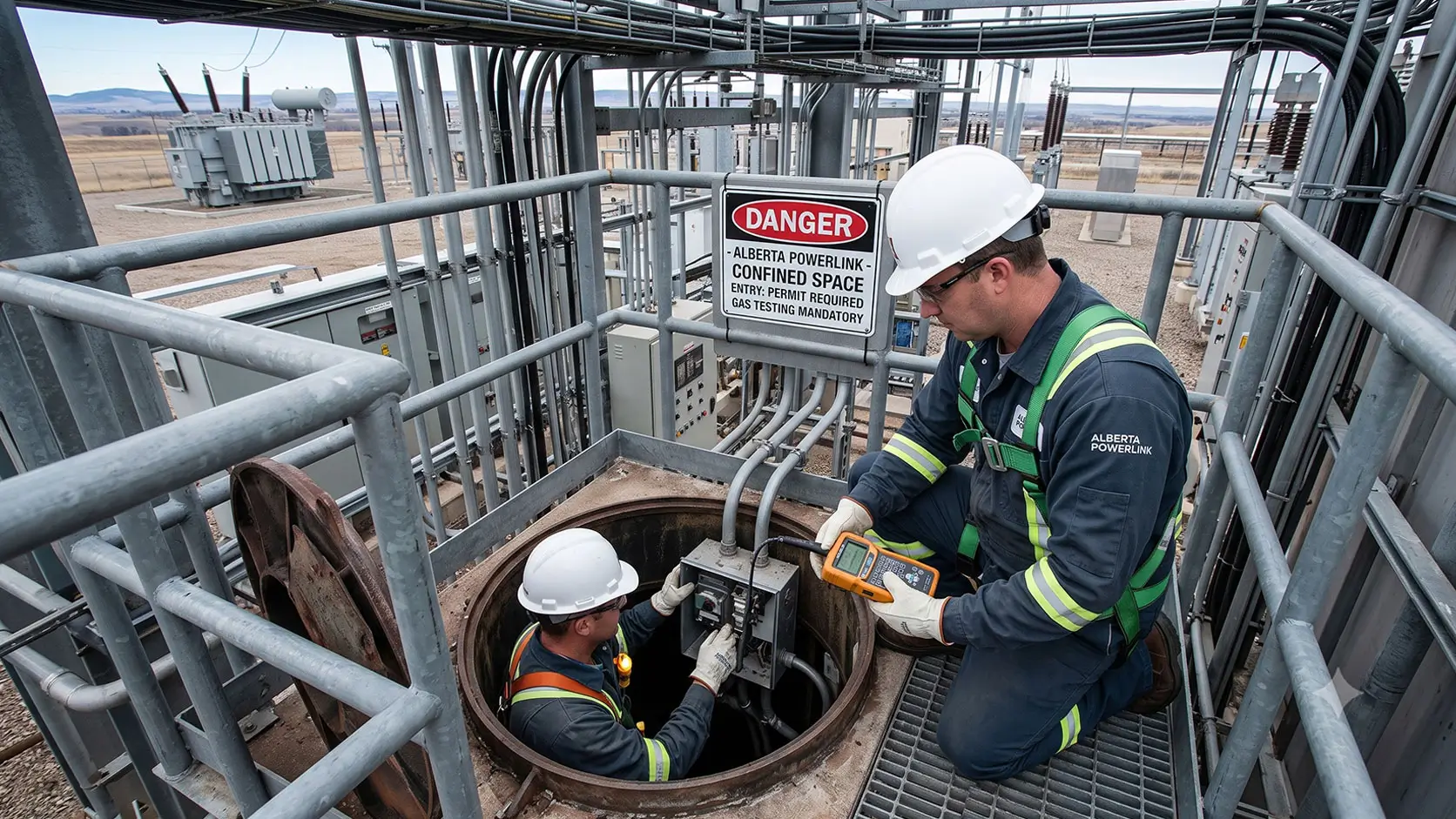
A confined space is any area with restricted entry and exit, not designed for continuous occupancy, that can accumulate toxic gas, oxygen deficiency, or a flammable atmosphere: a tank, duct, vault, silo, or underground electrical chamber.
The training covers identifying a confined space, the permit-to-enter system, continuous atmospheric testing and monitoring, forced ventilation when needed, and, the decisive part, a rescue plan that doesn’t put a second worker at the same risk.
Whenever the atmosphere inside can’t be guaranteed from outside.
- Electrical work in an underground vault or transformer chamber.
- Maintenance inside an industrial process tank.
- Cable installation in an enclosed duct or utility gallery.
- Any entry where the site owner requires a permit-to-enter.
Permit, atmospheric testing, and a rescue plan before entry.
- Confined space identification and risk classification.
- Permit-to-enter system.
- Continuous atmospheric testing and monitoring: oxygen, flammable gas, toxic gas.
- Forced ventilation when the atmosphere needs correcting before or during entry.
- Rescue plan: an outside attendant, constant communication, and rescue without unnecessary entry by a third worker.
Periodic refreshers, equipment checked at every entry.
Training is refreshed periodically under internal policy, and every confined space entry requires a fresh atmospheric test, regardless of how many times the same space has been accessed before.
Planned entry, not an improvised decision.
- A dedicated outside attendant on every entry, never a lone technician.
- Calibrated gas monitor available for every field crew.
- A documented rescue plan before entry, not improvised afterward.
What counts as a confined space?
Any area with restricted entry and exit, not designed for continuous human occupancy, with the potential for toxic gas buildup, oxygen deficiency, or a flammable atmosphere. A transformer vault and an underground cable chamber both fall into this category.
Does every confined space entry require a formal permit?
Yes, when the space is classified as a confined space with hazardous atmosphere risk, the permit-to-enter system is standard practice before any entry.
Who performs the rescue if something goes wrong?
The rescue plan is set before entry, with a trained outside attendant and constant communication. The priority is rescuing the casualty without putting a second worker at the same risk that affected the first.
Need to confirm Confined Space training before entry on your site?
We’ll send current team certificates along with a rescue plan specific to your project’s space.
Request Team Confined Space Certificates