Preventing a fall, and knowing what to do if it happens anyway.
Fall Protection is training for working at height that covers anchor point selection, correct use of a full-body harness, free-fall distance calculation, and, a point often overlooked, the procedure for rescuing a worker suspended after an arrested fall.
Hanging in a harness for an extended period is a medical emergency in its own right (suspension trauma). The training covers rescuing the casualty quickly, not just preventing the fall in the first place.
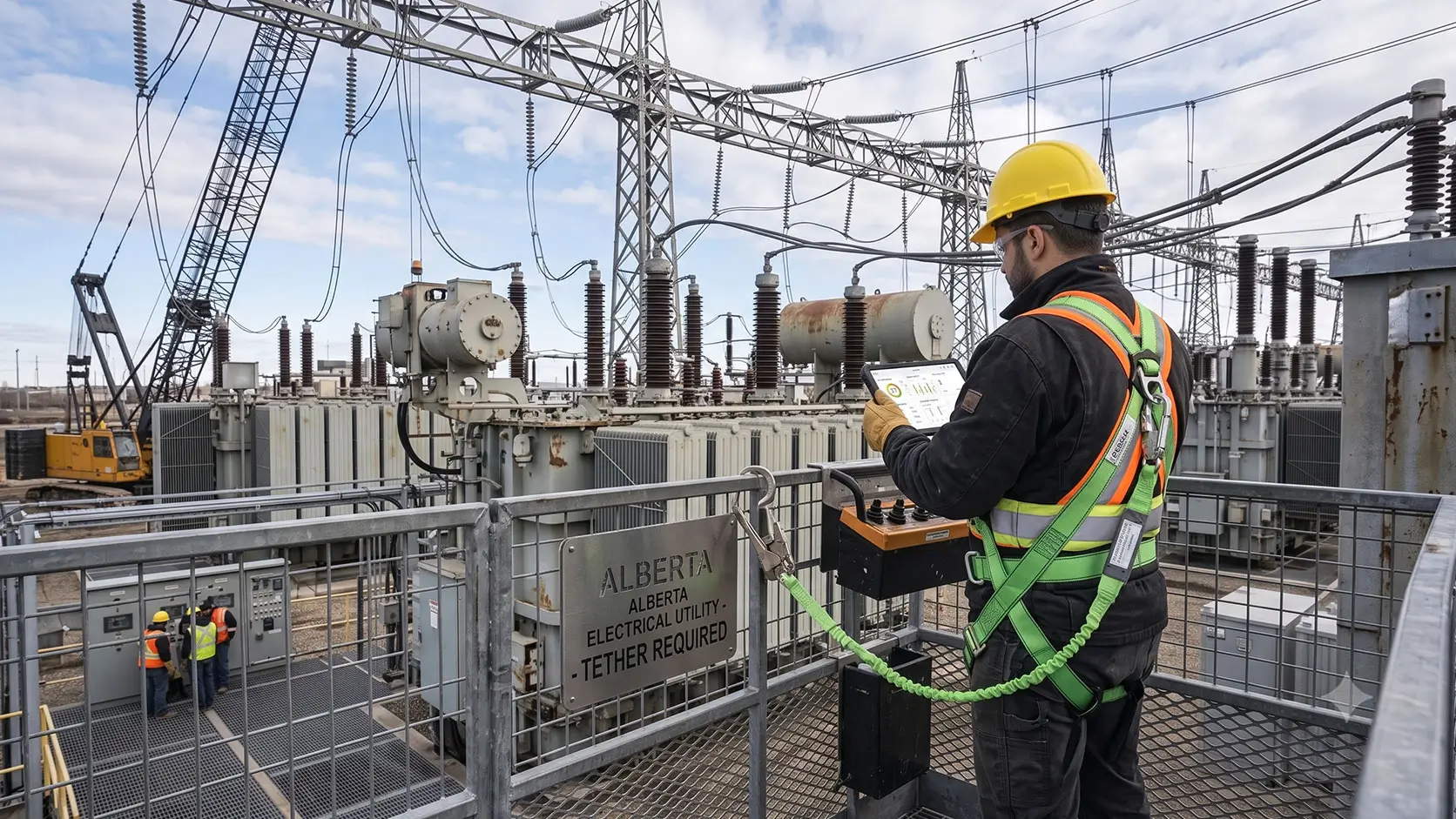
Any electrical work above ground level with fall risk.
- Installation and maintenance on elevated structures, towers, or roofs.
- Work on a platform without complete guardrails.
- Access to elevated electrical equipment at an industrial plant.
From anchor point to rescue.
- Anchor point selection with adequate load capacity.
- Correct fit of a full-body harness** and lanyard.
- Free-fall distance calculation** and the clearance zone below.
- Pre-use inspection** of all fall protection equipment.
- Rescue of a suspended worker**, including the maximum safe suspension time.
Periodic refreshers, equipment checked at every use.
Training is refreshed periodically under internal company policy, and every piece of equipment goes through a pre-use inspection regardless of the technician’s certificate validity.
Working at height without becoming a statistic.
- A tested rescue plan, not just equipment purchased and left in a bag.
- Documented equipment inspection before every use at height.
- Part of our SECOR programme, audited alongside the rest of our safety management system.
At what height does Fall Protection become mandatory?
In Alberta, the general threshold considers work above 3 metres (10 feet), but the specific risk of the job can require protection even below that mark. A site risk assessment determines the requirement, not just the number on its own.
Are a harness and a safety belt the same thing?
No. A full-body harness distributes impact force across several parts of the body. A simple body belt concentrates the force at the waist and isn’t accepted as primary fall protection under most current standards.
What is suspension trauma?
It’s the medical condition that can occur when a worker stays suspended in a harness for an extended period after an arrested fall, with the risk of impaired circulation. That’s why a fast rescue plan is a mandatory part of the training, not an afterthought.
Need to confirm Fall Protection before clearing work at height?
We’ll send current certificates for every technician along with the equipment inspection record.
Request Team Fall Protection Certificates